
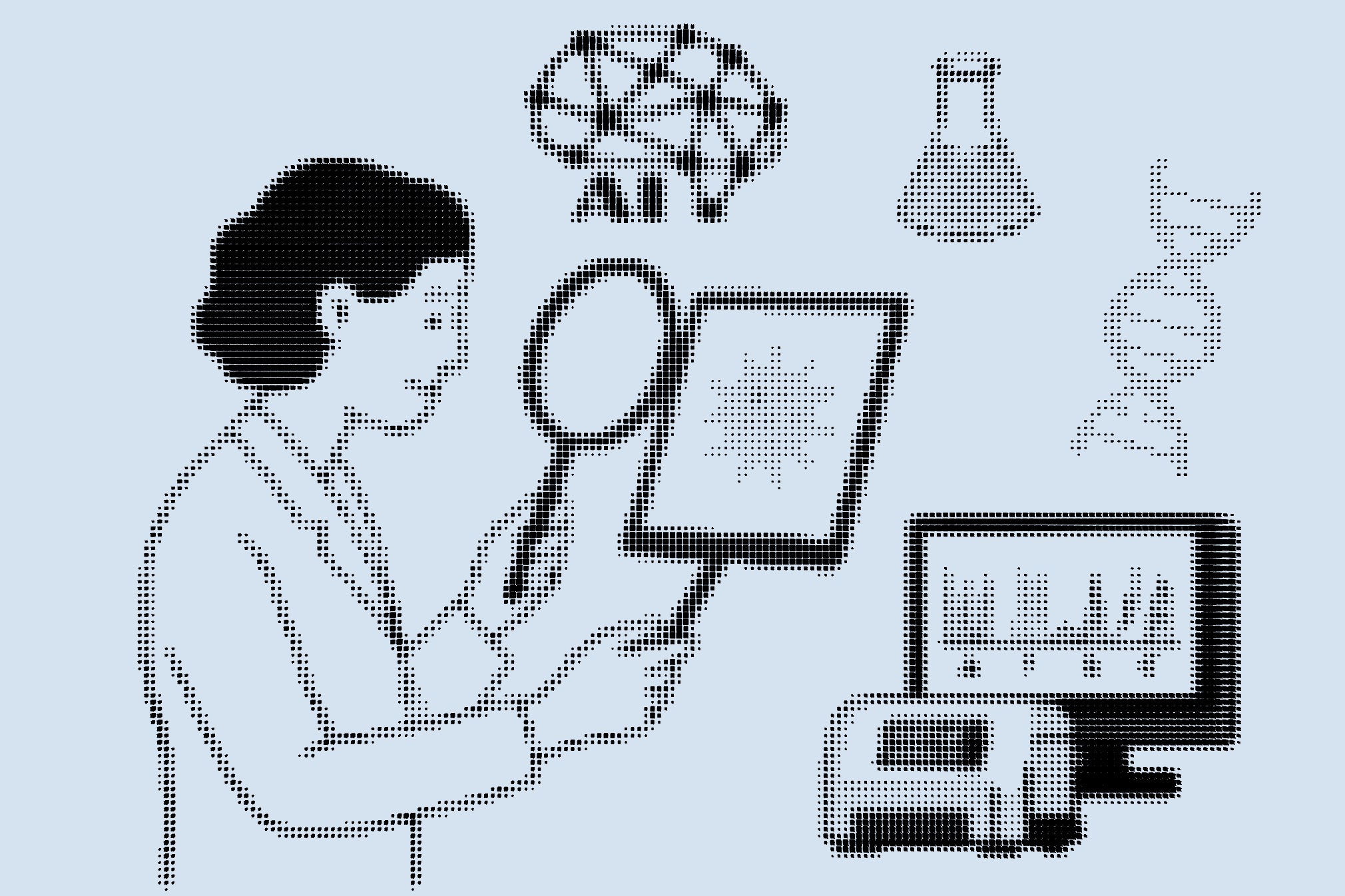
Precision Oncology: AI-Driven Molecular Diagnostics introduces students to the integration of artificial intelligence and molecular profiling in modern cancer diagnostics. The course explores how genomic, transcriptomic, and epigenomic data are generated and interpreted, and how AI tools are transforming variant classification, biomarker discovery, and clinical decision-making.
Students will gain insight into cutting-edge resources such as AlphaFold, AlphaMissense, AlphaGenome, and AI-based variant interpretation platforms, learning how these technologies support precision oncology and personalized therapy. The course also addresses key challenges, including data integration, model validation, clinical translation, and ethical considerations.
Designed for Master’s and PhD students, this program combines conceptual foundations with practical applications, preparing learners to critically evaluate and apply AI-driven molecular diagnostics in both research and clinical oncology.
The course is structured into six modules that provide a practical and up-to-date learning pathway on the application of artificial intelligence to molecular oncology, focusing on genomics, variant classification, and AI-based decision support for precision cancer care:
Module 1 – Understanding the genomic landscape of cancer
Module 2 – Cancer complexity & response to therapy
Module 3 – AI applications in precision oncology
Module 4 – Tools for genetic variant classification
Module 5 – A practical guide for AI genomic tools
Module 6 – Predictive biomarkers & clinical decisions
Each module comprises two lessons, including explanatory videos, slides, in-depth reading materials, hands-on tutorials, and self-assessment quizzes. The course is designed to provide participants with both theoretical knowledge and practical skills, enabling them to apply AI-based solutions for the interpretation of genomic data and personalized oncology in clinical and research settings.
Upon course completion, students will be able to:
-
Explain the genomic complexity of cancer and describe the principles of next-generation sequencing (NGS), including WES, RNA-seq, and epigenomic approaches, highlighting their roles in precision oncology. (Remember – Understand)
-
Analyze tumor heterogeneity and mechanisms of therapy response, including drug resistance and cell plasticity, and discuss their implications for personalized treatment strategies. (Analyze – Understand)
-
Evaluate current and emerging AI applications in oncology, including the use of specific genomic tools, and critically assess their strengths, limitations, and clinical relevance. (Evaluate – Understand)
-
Classify genetic variants using established guidelines (e.g., ACMG) and apply several bioinformatic tools to interpret genomic data for clinical decision-making. (Apply – Analyze)
-
Perform hands-on analyses with AI-based tools for structural modeling, pathogenicity prediction, and integration of multi-omics data in cancer research and diagnostics. (Apply – Analyze)
-
Integrate AI-driven solutions into clinical decision support systems, evaluating their role in biomarker discovery, cancer interception, and prediction of drug resistance evolution. (Evaluate – Apply)
-
Critically discuss the ethical, regulatory, and translational challenges of implementing AI in molecular oncology, including algorithmic bias, reproducibility, and validation. (Evaluate – Create)
Passing quizzes consisting of true/false and/or multiple-choice questions.
Each module consists of two lessons, which include videos, written texts, scientific articles, quizzes, and external links to digital resources, and supplementary materials.
Basic knowledge of biology and genetics
Roberto Piva
Claudia Voena
roberto.piva@unito.it
claudia.voena@unito.it
For technical inquiries:
edvancedeh@unito.it